
Quick Answer
Yes, Argentina is generally safe to visit for the vast majority of international travelers. It maintains one of the lowest violent crime rates in Latin America. However, petty crime like pickpocketing, street scams, and opportunistic theft are highly prevalent in major urban transit hubs, specifically within certain neighborhoods of Buenos Aires and Rosario. If you practice standard situational awareness, stay alert in crowded spaces, and protect your digital assets, you will enjoy a trouble-free experience exploring this beautiful country.
My First Night in Buenos Aires: A Lesson in Street Smarts
I still remember the smell of grilled flank steak wafting through the cool evening air of Palermo Soho during my very first night in Buenos Aires. I was relaxed, full of world-class Malbec, and entirely too complacent. I had my phone sitting casually on the edge of our outdoor restaurant table while I chatted with my partner.
Within a fraction of a second, a young man on a passing motorcycle swerved close to the curb, leaned over, and snatched my phone clean off the wood. He was gone down the avenue before I could even stand up.
It was a classic motochorro (motorcycle thief) hit. That painful, frustrating night taught me my first major lesson about travel in South America: Argentina is not inherently violent, but its street thieves are incredibly fast, highly opportunistic, and always looking for distracted tourists.
Since that rough introduction years ago, I have spent months navigating every corner of this country—from the bustling avenues of the capital to the isolated, windy tracks of the deep south. If you are asking yourself, “is argentina safe to visit?” the answer is a resounding yes, provided you leave your assumptions at home and adopt a practical, human-centric approach to local safety.
Understanding Argentina Travel Risks in 2026
To understand safety here, you have to separate sensationalized news from everyday reality. Argentina is currently wrestling with complex economic shifts and high inflation, which naturally influences local crime patterns. However, according to regional security assessments, the country’s violent crime index remains significantly lower than neighboring nations like Brazil or Colombia (Dammert, 2025).
The primary argentina travel risks you will encounter are non-violent property crimes. Think of things like argentina pickpocketing, backpack slitting on crowded subways, and the famous “mustard scam,” where a polite stranger points out a stain on your jacket and cleans it off while their partner quietly empties your pockets.
Kidnapping and Severe Crime Realities
Many first-time travelers express worry over extreme threats like an argentina kidnapping risk. In reality, express kidnappings—where a victim is forced to withdraw money from an ATM—do occur in the region, but they are exceptionally rare for international tourists. These incidents are largely concentrated in deep, non-tourist suburban belts of Greater Buenos Aires and parts of Rosario that travelers have no reason to visit.
Geopolitical Stability
From a political standpoint, argentina political stability is characterized by passionate democracy. Large-scale public protests, known locally as manifestaciones or piquetes, are a common feature of life in downtown Buenos Aires, especially around the Plaza de Mayo and Avenida 9 de Julio. While these protests are generally loud, musical, and peaceful, they can paralyze city traffic and public transportation.
Troubleshooting Advice: If you run into a street protest, do not panic. Simply turn around and walk two blocks in the opposite direction. Never try to push through a crowd of demonstrators, as tensions between protestors and local police can escalate quickly.
Best Neighborhoods in Buenos Aires for Safety
The capital city is a massive, sprawling metropolis composed of distinct neighborhoods (barrios). Where you choose to drop your bags will directly dictate your baseline safety experience.
| Neighborhood | Safety Level | Vibe & Visual Cues | Best For |
| Palermo (Soho & Hollywood) | High | Tree-lined streets, trendy boutiques, heavy private security presence. | Solo travelers, foodies, and nightlife. |
| Recoleta | High | Classic European architecture, wide sidewalks, affluent residential feel. | Families and older travelers looking for peace. |
| Puerto Madero | Very High | Modern waterfront skyscrapers, intense naval police patrolling, restricted vehicle entry. | High-budget travelers prioritizing complete security. |
| San Telmo | Moderate | Historic cobblestone streets, antique markets, dim lighting at night. | Daytime exploration; needs caution after dark. |
| La Boca (El Caminito) | Low-Moderate | Brightly painted zinc houses, high tourist concentration, surrounding blocks are high-risk. | Quick daytime visits strictly within the tourist corridor. |
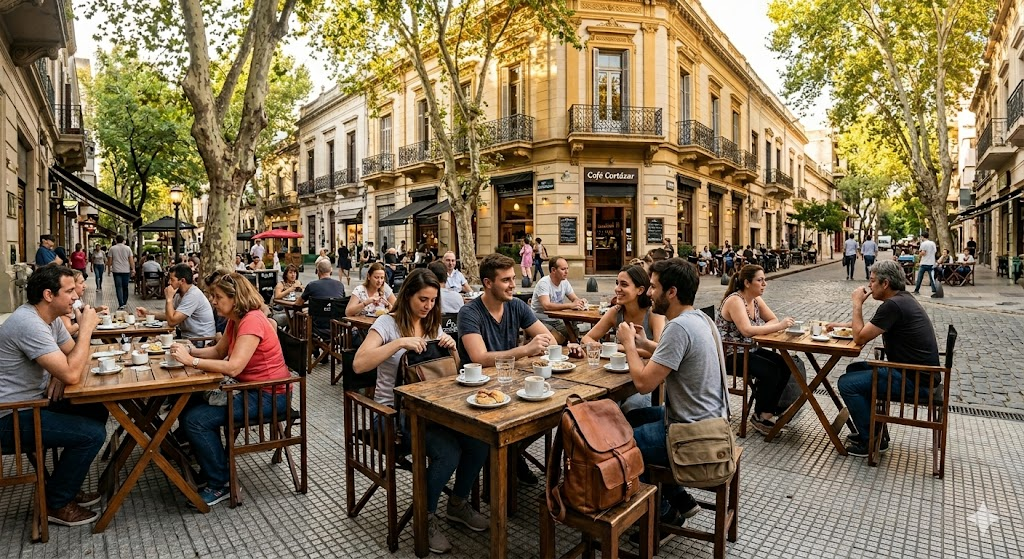
When considering the best neighborhoods in buenos aires for safety, Palermo and Recoleta are the undisputed champions for international arrivals. They feature excellent street lighting, active community life, and a highly visible police presence.
Conversely, places like La Boca require strict boundaries. While the two-block tourist strip of El Caminito is heavily policed during the day, stepping just two blocks outside this perimeter puts you into an active, high-crime industrial port zone. I once made the mistake of trying to walk to La Boca from San Telmo during a quiet Sunday morning. Within ten minutes, a local shopkeeper literally grabbed my arm, pulled me into his doorway, and told me in rapid Spanish to get an Uber immediately because walking those streets as a foreigner was an open invitation to get robbed. Listen to the locals—they always know the street-by-street boundaries.
Exploring Beyond the Capital: Regional Safety
Safety dynamics shift dramatically once you leave the concrete jungle of Buenos Aires.
Patagonia Safety
If your dream trip involves hiking the jagged peaks of El Chaltén or visiting the glaciers of El Calafate, you can breathe a massive sigh of relief. Patagonia safety is incredibly high. Violent crime is virtually non-existent in these southern mountain towns. The communities are small, tightly knit, and heavily reliant on tourism.
Your biggest risks in Patagonia are environmental rather than human. The regional winds can easily clock over 100 km/h, and weather conditions change from clear skies to freezing rain in less than thirty minutes.
The Best Areas to Stay in Argentina for Solo Travelers
For independent adventurers, the best areas to stay in argentina for solo travelers outside of Palermo include the central regions of Mendoza (the wine country), Salta in the northwest, and the lakeside town of Bariloche. These locations feature highly social hostel networks, reliable local tourist infrastructure, and a relaxed, welcoming atmosphere where English is widely understood in commercial zones.
Crucial Safety Precautions and Practical Tips
Staying secure in Argentina requires combining classic street smarts with specific, local adjustments.
Best Safety Tips for Argentina Travel
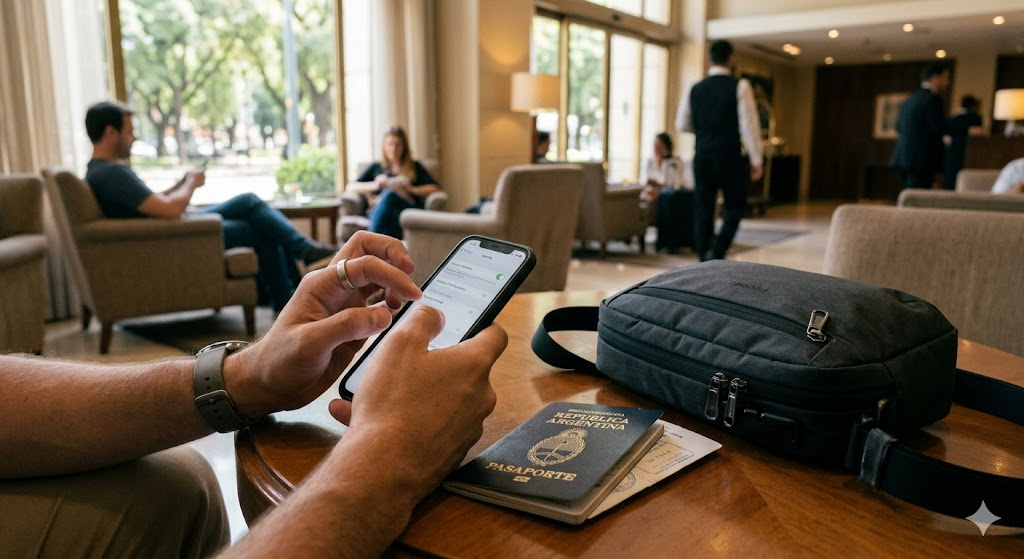
- Ditch the Smartphone Flex: Do not walk down the street holding your phone out in front of you for navigation. Step inside a shop, restaurant, or hotel lobby to check your maps.
- Keep Bags on Your Lap: When eating at outdoor tables, never hang your backpack over the back of your chair or leave it on the floor. Slip your leg through one of the straps or keep it firmly on your lap.
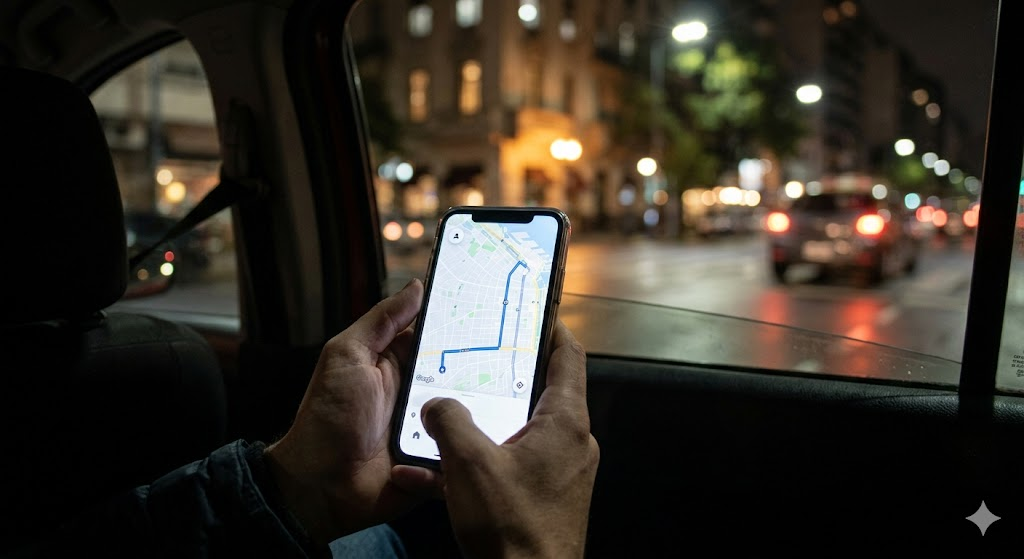
- Use Premium Ride-Hailing Apps: Avoid hailing random yellow-and-black cabs off the street late at night, particularly near nightclubs or transit stations. Stick to apps like Uber or Cabify, where the driver’s identity, vehicle plates, and route are fully logged digitally.
Best Safety Precautions for Argentina
When using cash, be highly observant. Because of the unique cash economy, counterfeiting can occasionally happen during fast transactions in busy bars or markets. Feel the texture of high-denominator bills; real Argentine pesos have distinct raised ink borders that are hard to replicate on standard paper.
Best Travel Insurance for Argentina
Never catch a flight without securing the best travel insurance for argentina. Look for providers like World Nomads or SafetyWing, ensuring your specific policy covers international emergency medical evacuation and high-value electronics theft. If you plan on technical mountaineering or ice trekking in Patagonia, make sure to add an adventure sports rider to your coverage.
Health, Roads, and Natural Disasters
Understanding your surroundings also means preparing for health variables and transit infrastructure.
Argentina Health Safety
Medical care in Argentina is exceptionally high-quality, particularly in private clinics across major urban centers. However, travelers should remain aware of recent regional updates. For instance, public health agencies recently tracked a rare, localized travel-associated cluster of Andes virus (a type of hantavirus) linked to regional expedition staging points in the far south (CDC, 2026). While human-to-human transmission is highly uncommon, it highlights the critical need to practice excellent hygiene and avoid entering enclosed, unventilated rural spaces like old sheds or abandoned cabins where wild rodents may nest.
Furthermore, tap water is completely safe to drink in Buenos Aires and major cities, but when traveling through remote areas of the desert northwest (like Jujuy or Chaco), sticking to bottled water is smart to avoid stomach issues.
Argentina Road Safety
If you plan on renting a car to drive the iconic Route 40 (Ruta 40), you need to prepare for intense argentina road safety challenges. Local driving styles are highly aggressive. Tailgating is common, and turn signals are frequently treated as optional suggestions rather than legal requirements.
In rural areas, many long-distance highways are simple two-lane roads with minimal shoulder space. Potholes can be massive, and loose gravel (riplo) in Patagonia can easily crack a windshield or cause you to lose traction if you speed. Avoid driving at night under any circumstances due to unlit roads, wandering livestock, and heavy long-distance truck traffic.
Argentina Natural Disasters
Geographically, Argentina is quite stable, meaning argentina natural disasters rarely disrupt travel. The western Andean region (Mendoza and San Juan) is prone to minor, infrequent seismic tremors. The most common disruptive natural force is the Zonda—a hot, dry, intense wind that sweeps down the eastern slopes of the Andes, blowing heavy dust clouds that can shut down local mountain airports and drastically drop visibility on regional highways for a day or two.
Family Travel and the Best Time to Visit
Argentina is a deeply family-centric culture. Children are welcomed warmly everywhere, from upscale restaurants to public plazas late into the evening.
Best Safe Cities in Argentina for Families
If you are traveling with children, look past the dense center of Buenos Aires and focus on the best safe cities in argentina for families:
- Villa General Belgrano: A peaceful, alpine-style village in the Córdoba hills known for its safety, pedestrian-friendly streets, and family resorts.
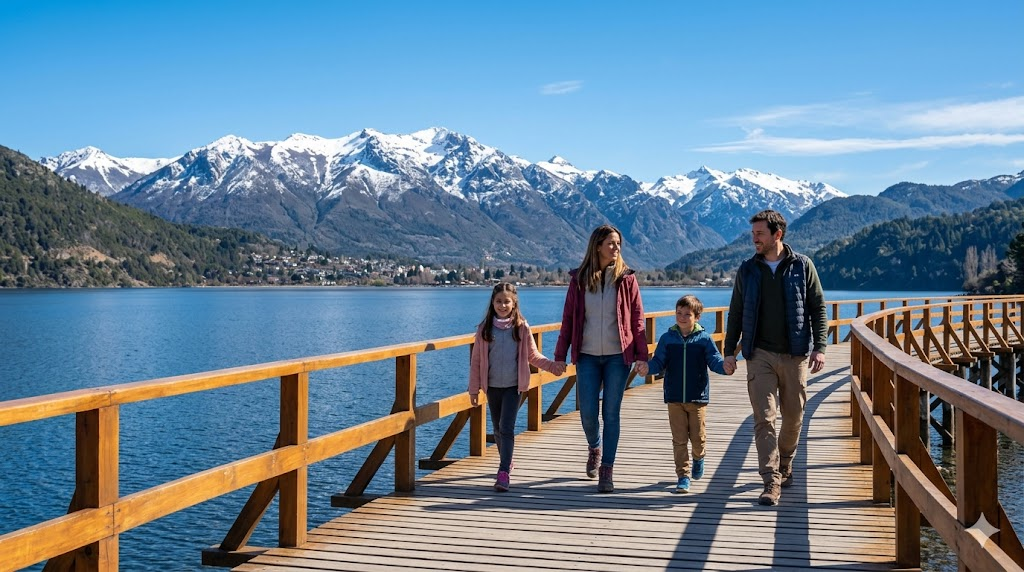
- San Martín de los Andes: A serene, picture-perfect lakeside mountain town in the northern Patagonian lake district that offers a incredibly safe environment for young children.
- Mendoza City (The Fifth Section): A clean, upscale residential district with massive green parks, slow-moving traffic, and a peaceful community layout.
Best Time to Visit Argentina for Safety
When planning your calendar, the best time to visit argentina for safety and smooth transit corresponds with the shoulder seasons: Spring (October to November) and Autumn (March to April). During these months, you avoid the extreme, dehydrating summer heat waves of the north and the intense, dangerous winter ice storms that frequently close mountain passes and hiking trails in the deep south.
Digital Security: Smart Tech for Your Journey
In the modern travel landscape, protecting your digital data is just as vital as securing your physical wallet.
Best Safety Apps for Argentina
Before arriving, download and set up the best safety apps for argentina:
- Cabify: The safest, most vetted ride-hailing network active across major cities.
- WhatsApp: Every single local business, hotel, and emergency contact uses this as their primary communication tool.
- Google Maps (Offline Mode): Download complete map data for entire provinces before heading out so you can navigate seamlessly without needing a live, visible cellular signal in remote areas.
Final Thoughts: The Human Factor
At the end of the day, your ultimate safety asset in Argentina isn’t an expensive money belt or a high-tech tracking device—it’s your willingness to connect genuinely with the people around you.
Argentines (Porteños in the capital, and Paisanos in the rural provinces) are incredibly expressive, warm, and fiercely proud of their country. If you find yourself lost, confused, or feeling slightly unsafe in an unfamiliar area, don’t isolate yourself. Walk into the nearest family-run neighborhood market (almacén), look the owner in the eye, and ask for help. More often than not, they will make sure you get safely where you need to go.
Stay aware, protect your belongings, respect the local boundaries, and you will discover that Argentina is one of the most vibrant, rewarding, and deeply enchanting destinations on the planet.
Frequently Asked Questions
Is it safe to walk alone at night in Buenos Aires?
It depends entirely on the specific neighborhood. Walking through well-lit, busy areas of Palermo, Recoleta, or Puerto Madero at 11:00 PM is common and generally safe due to active nightlife and heavy security. However, you should strictly avoid walking alone at night through San Telmo, La Boca, Retiro, or near major railway stations.
Can I use my credit card safely everywhere?
Yes, credit cards are widely accepted across Argentina in 2026. Using cards is highly secure and prevents you from needing to carry massive bricks of cash through the streets. Just ensure your card never leaves your sight during transactions at restaurants or shops to avoid skimming.
What should I do if I get robbed?
Never resist an active robbery. Hand over your belongings immediately without argument; your physical safety is worth infinitely more than a smartphone or wallet. Once secure, locate the nearest tourist police branch (Policía Turística) to file an official report (denuncia) for your travel insurance.
Is public transportation safe to use?
The underground subway system in Buenos Aires (Subte) and the extensive public bus network (Colectivos) are highly efficient and physically safe. The primary risk on public transit is non-violent pickpocketing during rush hour. Always wear your backpack on your chest and keep your hands on your valuable pockets when boarding crowded cars.
To gather more information about regional travel notices, security developments, or international entry updates, you can use the Google Search Bar to check live government travel advisories.